The Complete Guide to Catalog Management
In today's fast-paced digital marketplace, managing product catalogs effectively is no longer optional—it's a competitive necessity. Whether you're running an e-commerce store, a B2B supplier portal, or a procurement operation, catalog management ensures your product data is accurate, accessible, and optimized across channels. At its core, catalog management involves the centralized collection, organization, enrichment, and distribution of product information to drive sales, streamline operations, and enhance customer experiences.[1][2]
The global catalog management system market underscores this urgency, valued at approximately USD 2.14 billion in 2024 and projected to grow at a CAGR of 11.1% through 2030, reflecting surging demand for tools that handle complex, multi-channel data needs.[1] Closely related markets, like product information management, are even larger, expected to reach USD 19.95 billion in 2026.[3] Poor catalog management leads to lost sales, inventory errors, and frustrated customers, while robust systems can boost efficiency by up to 30% in procurement and e-commerce operations.
This pillar guide covers everything from basics to advanced strategies, best practices, challenges, implementation, and future trends. It serves as your central resource, linking to supporting content like How to Choose the Right Catalog Management, Top Catalog Management Mistakes to Avoid, the Catalog Management Buying Guide, and Catalog Management vs Alternatives: A Comparison.
What Is Catalog Management?
Definition: Catalog management is the systematic process of creating, maintaining, and distributing a centralized repository of product data. This includes attributes like descriptions, specifications, images, pricing, and variants, ensuring consistency across all sales and procurement channels.
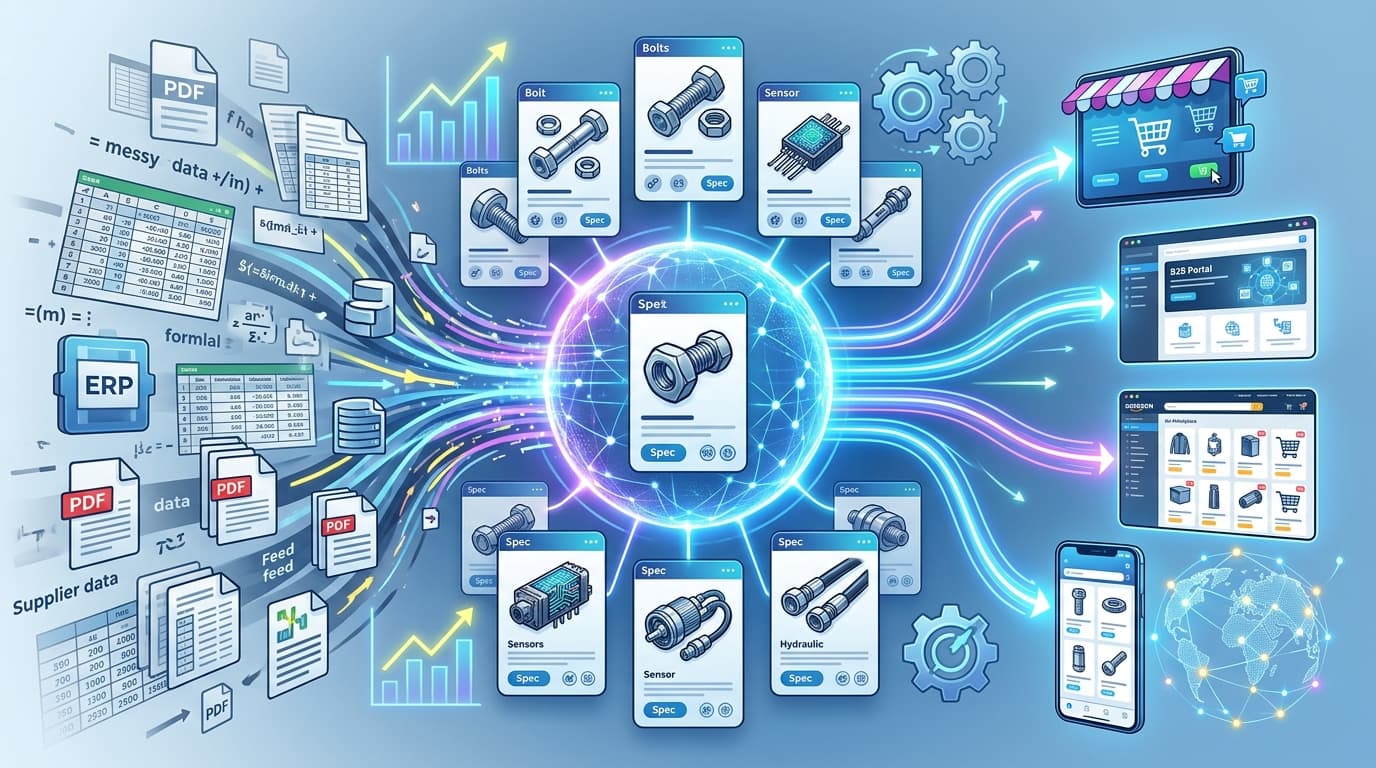
Unlike simple spreadsheets or isolated databases, catalog management handles dynamic catalogs with thousands of SKUs—think electrical components with hundreds of variants or hydraulic fittings requiring precise specs for European standards. It transforms raw, scattered data from ERPs, supplier feeds, PDFs, and Excel files into structured, searchable assets. For instance, a manufacturer of industrial fasteners might ingest data from multiple suppliers, normalize thread sizes and material grades, and output clean feeds for distributor portals.
Key Takeaway: Effective catalog management centralizes data to eliminate silos, enabling real-time updates and omnichannel consistency.
For B2B industrial suppliers, this means distributors receive uniform data for fasteners or sensors, reducing queries and speeding quotes. In e-commerce, it powers personalized shopping with rich media and SEO-optimized listings.
Why Catalog Management Matters
The stakes are high: inaccurate product data costs retailers up to 10-30% in lost sales due to poor search results and abandoned carts. In procurement, fragmented catalogs lead to maverick spending and overpayments.
Business Benefits:
- Revenue Growth: Optimized catalogs improve discoverability, with studies showing 20-50% uplift in conversion rates from enriched content. For example, adding high-quality images and detailed specs can reduce bounce rates significantly.
- Operational Efficiency: Automate updates to cut manual rework by 70%, freeing teams for strategic tasks like market expansion.
- Customer Satisfaction: Consistent, detailed info builds trust—vital for complex B2B sales like industrial parts where buyers need exact compatibility data.
- Compliance and Scalability: Meet regulations (e.g., EU data standards like GDPR or RoHS) and scale to 10K+ SKUs without chaos.
Market growth reflects this: The catalog management system sector is forecasted to hit USD 2.37 billion in 2026, growing at 9.56% CAGR.[6] For manufacturers dealing with ERP exports of product data for distributors, strong catalog management bridges the gap between internal systems and customer needs, ensuring data is not only accurate but also enriched for sales impact.
Key Components of Effective Catalog Management
A robust catalog management framework rests on these pillars:
- Data Collection and Integration: Ingest from ERPs (e.g., SAP, Oracle), suppliers, and spreadsheets. Support formats like CSV, XML, EDI, and even API feeds from marketplaces. Robust systems handle high-volume imports without downtime.
- Standardization and Normalization: Map attributes (e.g., "thread size" for fasteners or "voltage rating" for sensors) to consistent schemas, using taxonomies like eCl@ss or UNSPSC for industrials.
- Enrichment: Add images, videos, specs, SEO metadata, and even 3D models. AI can generate long-tail descriptions tailored to buyer queries.
- Workflow Management: Approval processes for changes, with role-based access to ensure compliance in regulated industries.
- Quality Control: Validation rules, deduplication, error detection via machine learning to flag anomalies like mismatched units.
- Syndication: Export to channels like Amazon, Shopify, ERP, print catalogs, and partner portals with format-specific adaptations.
- Analytics and Reporting: Track performance, usage, and ROI metrics, such as time-to-market for new SKUs or error rates per channel.
Key Takeaway: These components create a single source of truth, reducing errors from 15-20% in manual systems to under 1%. In practice, industrial firms see faster quote turnaround as distributors access reliable variant data instantly.
Best Practices for Effective Catalog Management
Implementing proven strategies maximizes ROI. Here's how:
Standardize Data Structures
Use hierarchical categories (e.g., Electronics > Sensors > Industrial) and mandatory attributes. For European manufacturers, include multilingual fields (English, German, French) and compliance tags like RoHS or REACH. Define a master attribute list upfront to avoid future rework—tools like AI classifiers can auto-map legacy data.
Automate Data Enrichment
Leverage AI for auto-tagging images, generating descriptions, and matching variants—critical for high-SKU catalogs like automotive parts. For example, computer vision can identify bolt types from photos, saving hours of manual input.
Ensure Multi-Channel Optimization
Tailor outputs: SEO-rich for web with keywords like "industrial hydraulic fittings catalog management," spec-heavy for B2B portals. See Top Catalog Management Mistakes to Avoid for pitfalls like inconsistent pricing across Amazon and distributor sites.
Prioritize Data Governance
Assign owners per category, set update cadences (e.g., quarterly for pricing), audit regularly with automated reports. Implement version control to track changes and rollback if needed.
Integrate with Existing Systems
Seamless ERP/CRM sync prevents silos. Use middleware like MuleSoft for complex integrations, ensuring real-time bi-directional flow.
Industry leaders emphasize centralization for procurement savings of 5-15%. Adopting these practices can transform catalog management from a cost center to a revenue driver.
Common Challenges in Catalog Management and How to Overcome Them
Despite benefits, hurdles persist:
| Challenge | Impact | Solution |
|---|---|---|
| Data Silos & Inconsistency | Duplicate efforts, errors, up to 20% data inaccuracy | Central repository with integration APIs, ETL tools for unification |
| Handling Supplier/Third-Party Data | Poor quality, delays in onboarding new suppliers | Automated validation & enrichment tools, supplier portals for self-service uploads |
| Multi-Channel Complexity | Version control issues, channel-specific errors | Channel-specific templates & syndication engines with preview modes |
| Large SKU Volumes (10K+) | Scalability woes, slow search[9] | AI-powered search, faceted navigation, hierarchical taxonomies |
| Manual Updates & Errors | High rework costs, 30-40% staff time wasted | Workflow automation, real-time sync, AI anomaly detection |
For industrial suppliers, distributor demands for structured data (e.g., precise specs for fasteners, including torque ratings and certifications) amplify these. Address via Catalog Management Buying Guide. Real-world example: A hydraulic components maker reduced supplier data errors by 60% using AI validation, accelerating time-to-market by weeks.
Key Takeaway: Proactive automation turns challenges into advantages, cutting manual work by 50-70% and enabling focus on innovation.
Choosing the Right Catalog Management Solution
Focus on scalability, AI features, ease of use. Key features table:
| Feature | Why It Matters | Must-Have for Industrial |
|---|---|---|
| AI Enrichment | Auto-fills gaps, scales enrichment | Handles complex variants like fittings with auto-spec generation |
| Multi-Language | Global reach, localization | EU/German standards, auto-translation |
| ERP Integration | Seamless data flow | Export from SAP/Oracle, bi-directional sync |
| Custom Workflows | Team collaboration | Approval for specs, compliance checks |
| Analytics | Performance insights | Distributor usage tracking, SKU performance |
Dive deeper in How to Choose the Right Catalog Management.
Step-by-Step Guide to Implementing Catalog Management
- Audit Current Data: Inventory sources (ERPs, spreadsheets, suppliers), assess quality with sampling—identify duplicates, missing attributes.
- Define Schema: Attributes, hierarchy (e.g., categories for components like 'Hydraulics > Fittings > Quick Connects'). Involve stakeholders for buy-in.
- Select Tool: Cloud-based for speed, scalability; evaluate via POC with your data.
- Migrate Data: Cleanse outliers, standardize using rules/AI, pilot with top SKUs.
- Set Workflows: Roles (data stewards, approvers), notifications, escalation paths.
- Integrate Channels: Test syndication to e-com, portals; validate outputs.
- Train Team: Hands-on sessions, video tutorials, certification programs.
- Monitor & Iterate: KPIs like data accuracy (target 99%), syndication success rate, user adoption. Use dashboards for ongoing optimization.
Expect 3-6 months for full rollout, with quick wins in weeks via AI tools. Case study: An electrical components distributor cut migration time by 40% using automated mapping.
Catalog Management vs. Alternatives: A Quick Comparison
| Approach | Pros | Cons | Best For |
|---|---|---|---|
| Spreadsheets | Free, simple, quick start | Error-prone, unscalable beyond 500 SKUs, no automation | <100 SKUs, startups |
| ERP Alone | Integrated ops, existing investment | Poor enrichment, rigid schemas, limited syndication | Internal inventory only |
| Catalog Management | Centralized, automated, omnichannel | Initial setup time/cost | Multi-channel, 1K+ SKUs, industrials |
| Custom Dev | Tailored exactly to needs | Expensive ($100K+), slow (6-12 months), maintenance heavy | Rare, ultra-specific needs |
Full analysis in Catalog Management vs Alternatives: A Comparison.
The Future of Catalog Management
By 2026, AI will dominate: agentic systems for real-time enrichment, predictive analytics forecasting demand-based updates, and autonomous governance with self-healing data pipelines.[11][12] Expect multimodal AI handling images/videos/text seamlessly, headless commerce integration for plug-and-play channels, and hyper-personalization where catalogs adapt to buyer profiles. Blockchain for traceability in supply chains, voice/search optimizations, and sustainability metrics (e.g., carbon footprint per SKU). For manufacturers, AI bridges ERP data to distributor-ready catalogs instantly, with generative AI creating custom bundles or virtual prototypes. Early adopters report 25% faster product launches.
FAQ
What is catalog management?
The process of centralizing, enriching, and distributing product data across channels for consistency and efficiency, turning raw info into sales-ready assets.
Why do distributors demand better product data?
Inaccurate data causes listing errors, delays, and lost sales—structured catalogs meet their requirements seamlessly, enabling faster quoting and reducing support tickets by up to 50%.
How does catalog management differ from ERP?
ERP focuses on operations and inventory; catalog management enriches data for external channels like portals and e-com, adding marketing layers like SEO and multimedia.
Can I structure product data without a dedicated system?
Yes, via standardized Excel templates or basic PIMs, but scale limits benefits—beyond 1K SKUs, manual errors skyrocket. AI tools accelerate without full systems.
What are the costs of poor catalog management?
Lost listings on marketplaces, manual rework (up to 40% time), missed opportunities—ROI from fixes often 5x via higher conversions and efficiency.
What's a product data quality checklist?
Audit attributes (completeness 95%+), validate specs/accuracy, test syndication outputs—downloadable checklists emphasize specs for industrials like material certs and dimensions.
How to export product data from ERP for catalogs?
Map fields via connectors, cleanse duplicates, enrich with AI—handles variants for manufacturers exporting thousands of electrical or hydraulic items daily.
Is AI essential for modern catalog management?
Yes, for 2026 trends like auto-enrichment, real-time compliance, and predictive maintenance of data quality in dynamic markets.
Ready to transform your catalog? Upload your product data at FacetFlux and see it organized in seconds. No setup required—AI handles the heavy lifting.